

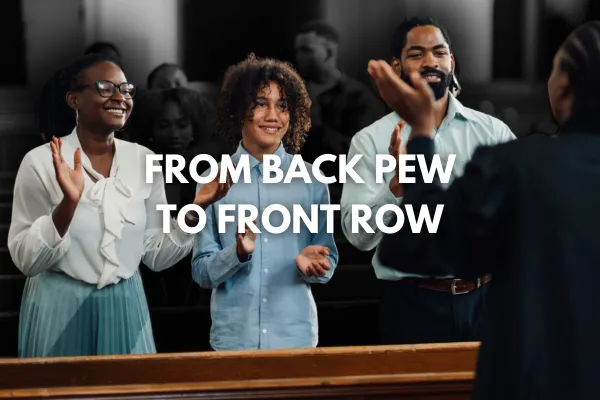
From Back Pew to Front Row: Designing Church Music and Space for Kids in Worship
Llewon Felder-Price and Rev. Linda Furtado led a workshop all about children in worship for the Shifting the Atmosphere Conference in Dallas, TX on May 2, 2026 as leaders invited by the Junius B. Dotson Institute for Music in the Black Church and Beyond. The following is a structured breakdown of the takeaways and key points of that session. Click here for a copy of the lyric-sheet/handout provided at the event.
The moment you change the key, the room changes. A simple chorus sits where young voices can reach it, a child hears their name sung back, and a back-pew observer becomes a participant. That’s the quiet craft of youth worship. Here there is less spectacle with more attentive design. Many churches miss it not because they don’t care, but because adult habits run the show. The result is predictable: kids watch, don’t sing, and eventually drift.
This is a field-tested guide for churches that want to turn the room as they shift the atmospher musically, pastorally, and practically so that children and youth can trust it and join.
What’s Really Going On: Context and Why It Matters
The default is adult-centric worship. Keys sit too high (or low), arrangements are too complex, and planning assumes insider knowledge.
Youth and children read those signals quickly. If the songs feel unreachable or the expectations unclear, they opt out.
The consequences are subtle but real: kids disengage, families drift, and the church’s formative role in music and faith thins out.
Why this matters:
Faith formation is embodied and relational, not just sermons and stagecraft.
Participation builds skills including: listening, leadership, creativity. These skills carry beyond Sunday.
Churches regain generational continuity when youth feel needed, heard, and safe.
To summarize what we learned in the workshop: "If they can’t reach the notes, they won’t reach for the notes."
The First Rule: Make It Singable
Choose the Right Key
Young voices have limited range. If the key sits too high or too low, kids stop trying.
Test keys midweek with actual children. Ask: “Does this feel easy or hard in your voice?”
Favor Unison Over Harmony
Layered choral stacks are a non-starter for beginners.
Unison builds confidence and communal sound. Add simple harmony later.
Select Songs That Fit the Room
Start with accessible melodies, predictable rhythms, and short phrases.
Let the congregation teach by energy. A room that sings simply, sings more.
Teach the “Hard” Parts First—Playfully
Begin with the unusual syllables or rhythms. Consider the “funky fragment” kids might find most intriguing.
Celebrate attempts, not polish. Joy precedes mastery; mastery follows repetition.
Example: Teaching “Come All You People” in the Shona language
Break language into playful sounds (e.g., “Oo-ya-ee-moh-seh”).
Let the body feel the sounds before adding melody.
Layer gradually: sounds → phrases → tune → tempo.
Firm, Open, Prepared, Flexible: Authority That Builds Trust
Stand in What You Believe—Without Harshness
Youth read steadiness as safety. State boundaries calmly ahead of time.
Keep consequences proportionate and explained. Respect dignity, even when correcting behavior.
Speak Their Language—Without Pandering
Vocabulary is hospitality. Learn local words; use them sparingly and naturally.
Keep sacred-space standards. Casual can be reverent.
Model Worship, Don’t Perform It
Show posture: lift hands, sing a simple refrain, invite repetition.
Give low-bar entry points. Singing or shouting together a single keyword like “Rejoice!” unlocks participation.
Prepare to Pivot
Plan at least a month ahead; design or anticipate flex points for last-minute changes.
Use simple choruses that a band or a track can play under prayer or transitions.
Build clear handoffs among leaders so changes feel orderly.
Meet Them Where They Scroll: Tech That Reduces Friction
Use Social Media as Pre-Class
Share a “Sunday Songs” playlist by Thursday with the choir, both kids and parents.
Exposure builds familiarity; familiarity builds confidence.
Clean Your Algorithm
Keep searches focused on appropriate, diverse content.
Encourage families to subscribe to vetted church playlists and educators.
Allow Devices—Thoughtfully
Post lyrics via QR codes; offer print handouts for low-tech access.
Accessibility is hospitality.
Inclusion Is Infrastructure, Not Vibe
Design the Space for Visible Belonging
Front-row tables with crayons and sketch pads.
An art station with an easel; a rotating vestibule “gallery wall” for children’s art.
Sensory-friendly options: soft seating, quiet corners, noise-dampening headphones, visual schedules.
Program Real Roles
Kids as ushers, greeters, readers—with coaching and short scripts.
Liturgical movement once a month; build a children-led dance offering over time.
“Artist in residence” rotations for sketches, poems, and prayers by young people.
Teach That Creative Work Is Worship
Drawing during a hymn, cross-stitch during a prayer, dancing in the chorus—these are forms of devotion.
Help kids learn a worship cycle: priase → Word → response → sending.
Pastoral moment: Some will bristle when things are not as many are comfrotable or used to. Like one of our workshop attendees say, reframe with gentleness—“Looks like we just gained a liturgical dancer”—while keeping safe movement zones and volume guidelines.
Intergenerational Rehearsal: Let the Children Lead
Bring Children Into Adult Choir Rehearsal
Invite kids into the first 20–30 minutes to teach common songs.
Design children-only moments: mark a refrain they will lead on mics while adults yield.
Say it plainly in rehearsal: “This is the kids’ moment. Adults, hold back.”
Memorable quote on this from the workshop: "The sun doesn’t stop shining to make room for stars; it steps aside so the sky can show its depth."

Voice Care and Energy Management
Hydrate, warm up, avoid irritants; consider sugar-free rehearsal days.
Keep pivot tools ready: movement breaks, rhythm games, call-and-response resets.
Be transparent: “We’re preparing because we want to offer our best.”
Strengths-Based Pairing
Pair complementary strengths: confident singer with rhythm-strong peer, lyric-lover with pitch-accurate peer.
Watch what lights a child up, then design roles around it.
Underlying Mechanisms You Can Use
Negativity Bias in the Sanctuary
Adults often assume disinterest when kids are quiet. Check design first: wrong key, complex song, no prep.
Ask before diagnosing. Adjust environment before labeling behavior.
Attention and Energy
Engagement mirrors the room’s energy.
Warm call-and-response and name-singing invite presence. Firm, friendly direction outperforms scolding.
Formation Over Performance
Historically, churches taught music as discipleship. Reclaim that role.
Build steady skills then build on that over time: unison now, simple harmony next, leadership opportunities later.
Regulation Through Rhythm
A heartbeat cue gathers scattered attention. Tap a steady “boom-boom” on heart, laps, or pews.
Pair that pulse with a meditative refrain. Brief silence teaches stillness as a skill that many kids need even beyond the choir room.
Working With Real People in Real Rooms
Plan With Intention, Not Hope
Map themes, music, roles, sensory elements, and contingency games at least a month ahead.
Align youth activities and songs with the sermon series for coherence whenever possible.
Rights and Permissions
Use hymnary.org, CCLI, OneLicense, and other tools (and your licensing provider) to verify public domain and streaming/licensing status.
Respect composer boundaries; some works cannot be altered for livestreams.
Guided Failure: Agency Without Harm
Let youth lead projects within safety, budget, and dignity boundaries.
If intervention is needed, co-lead transparently and debrief. Protect learning, not perfection.
Practical Implications for Leaders
For Worship Leaders
Audit the next four services for singability and child participation.
Pre-test keys with a small group of kids; adjust charts or tracks accordingly.
For Music Teams
Maintain a catalog of unison-friendly songs in multiple keys.
Curate kid-ready tracks with background vocals in accessible ranges.
For Pastors and Program Directors
Build a small youth advisory group for preferences and feedback.
Normalize devices for lyrics; provide print alternatives.
Assign tangible roles: readers, musicians, tech helpers, greeters.
Sidebar Explainer: Solfège by Numbers
Instead of “Do, Re, Mi,” use “1, 2, 3.” Each number is a scale degree. Using numbers they already know offers a readily portable learning tool across keys. “1” is home base whether you’re in C or E. Kids learn pitch movement and can transpose without formal theory. Print simple staff lines with numbers beneath the notes to demystify reading.
A Short List of Actions You Can Take This Month
Create a “Sunday Songs” playlist and share it with families every Thursday.
Add QR codes for lyrics to slides; print 20 lyric handouts for the back pew.
Run a 15-minute key test with two kids before rehearsal; log their comfort ranges.
Replace one complex choir piece with a strong unison congregational chorus.
Introduce a call-and-response name song to open children’s time.
Place a request “treasure box” for youth song ideas; review monthly with a small committee.
Stock a sensory kit: fidgets, headphones, a visual service map.
Invite children into the first 20–30 minutes of adult choir rehearsal; plan a kids-led refrain for Sunday.
Closing
You don’t need a bigger band to engage kids; you need a kinder design. Set the key where their voices live. Let them hear their names sung back. Teach the strange syllables first, and laugh when it gets messy. Share the playlist by Thursday. On Sunday, watch the back pew lean forward.
The church doesn’t lose children all at once. It loses them in small moments when we make singing harder than it needs to be. Make it easy to sing. When you do this the you make it easier to stay.
Want more guided insights and a learning resource you can come back to? Let us know by adding a comment or reaction to this post on social media. If reposting, be sure to tag @MinistersHelper.


Mail
Facebook
LinkedIn
X
Pinterest
Reddit